The pattern you are probably seeing
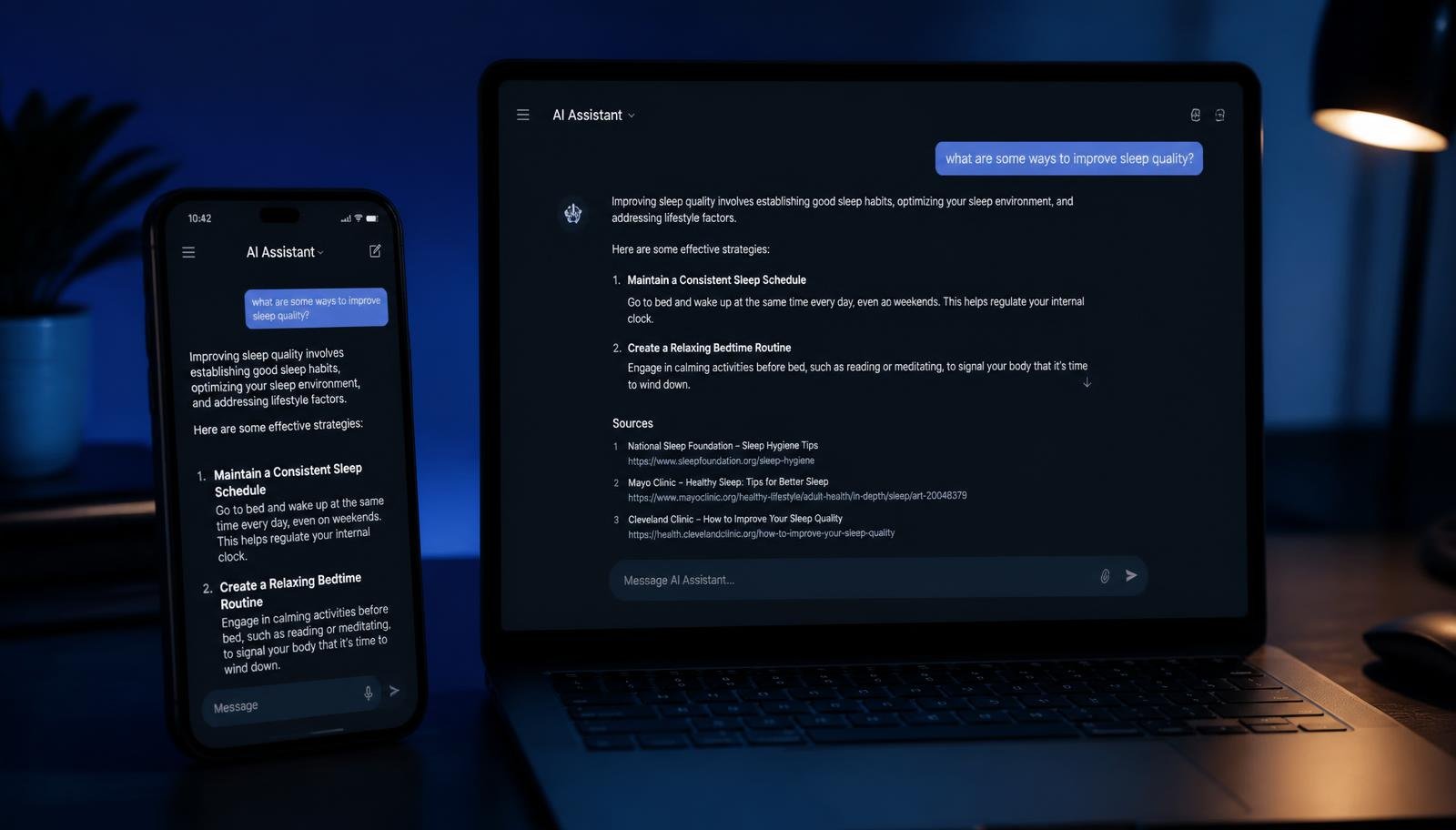
Since generative answers rolled out across Search, a specific Search Console signature has become common: impressions steady or rising, average position unchanged, clicks down 20–50% on informational queries. That is not a ranking problem. It is an answer-surface problem — the query is being satisfied before the user reaches your page.
Before you rewrite anything, confirm the diagnosis. Export 16 months of query data, segment by intent, and compare CTR year over year at the same average position. If CTR fell while position held, the SERP changed, not your relevance.
Step 1 — Segment queries by exposure
- High exposure: "what is", "how does", "difference between", "best practices for" — these are summarised most aggressively.
- Medium exposure: comparison and "vs" queries, where the engine lists options but users still click for detail.
- Low exposure: branded, transactional, local, pricing, login, and anything requiring a live tool or an account.
Your recovery budget belongs in medium-exposure and low-exposure clusters, plus making high-exposure pages citation-worthy rather than click-dependent.
Step 2 — Make answers extractable
Generative engines lift self-contained passages. Structure every key section so the first 40–60 words fully answer the heading:
- Question-shaped H2s that mirror real queries.
- A direct answer paragraph immediately under the heading, before the nuance.
- Tables for anything comparative — they are parsed cleanly and cited often.
- Short, numbered procedures rather than long narrative walkthroughs.
Step 3 — Give the click a reason to exist
If a summary can replace your page, it will. Add what a summary cannot carry:
- Original measurements from your own work (before/after Core Web Vitals, crawl-budget logs, index coverage recovery curves).
- Copy-paste artefacts: config snippets, middleware, schema blocks, spreadsheets.
- Interactive diagnostics or checklists tied to the reader's stack.
- Judgement: which option to pick, when the common advice is wrong, and what breaks in production.
Step 4 — Strengthen the entity layer
Citation selection leans on entity confidence. Connect the graph: a single Person or Organization node with a stable @id, referenced as author and publisher across every article; sameAs links to profiles that verify the identity; consistent NAP; and Article plus FAQPage markup that matches visible content exactly.
Step 5 — Fix the crawl and render path for AI agents
AI crawlers are less patient than Googlebot. Ensure content is in the initial HTML rather than hydrated client-side, keep TTFB low, avoid interstitials and aggressive bot challenges on article URLs, and decide deliberately in robots.txt which AI user agents you allow. Blocking everything removes you from the answer surface entirely.
Step 6 — Measure what replaced the click
Track brand-query volume, direct traffic to deep URLs, referral traffic from ChatGPT, Perplexity and Copilot, and assisted conversions. Visibility increasingly shows up as recall and referral rather than an organic session.
What not to do
- Do not apply
nosnippetsitewide — you lose ordinary snippet real estate too. - Do not spin more thin informational posts; that is the exact inventory being replaced.
- Do not chase the drop with keyword stuffing or FAQ bloat that does not match visible content — mismatched markup risks manual action.
Want this run against your own Search Console data? See the AI search optimization service or request a technical review.